

- Search
 Lot I-10-7, D7 Street, Saigon Hi-Tech Park, Tang Nhon Phu Ward, Thu Duc City, HCMC
 (+84) 28 7301 3688
 Info@wembleymed.com.vn
A blood draw for laboratory testing takes only a few minutes, yet its result can influence a patient's entire diagnosis and treatment. A blood draw for laboratory testing takes only a few minutes, yet its result can influence a patient’s entire diagnosis and treatment. According to a recent systematic review, hospitals in the United States perform nearly 500 million inpatient blood draws each year, and more than 60% of clinical decisions are based on these results. This makes sample quality at the point of collection critically important.
So how should blood be collected? Direct venipuncture has long been regarded as the standard of care. However, in the Emergency Department and Intensive Care Unit (ICU), healthcare workers increasingly draw blood through vascular access devices (VADs), such as peripheral intravenous catheters (PIVCs) or central lines, in the hope of sparing patients repeated needle sticks.
To assess how effective and appropriate this approach is, the systematic literature review published in the Journal for Healthcare Quality analyzed blood collection approaches from three perspectives: clinical, economic, and patient experience. The authors are Cathy Perry (practicing nurse at Tennessee Oncology, USA), Kimberly Alsbrooks and Alicia Mares (Medical Affairs at BD, USA), and Professor Klaus Hoerauf, MD (specialist in Anesthesiology and Intensive Care, Medical University of Vienna, Austria).
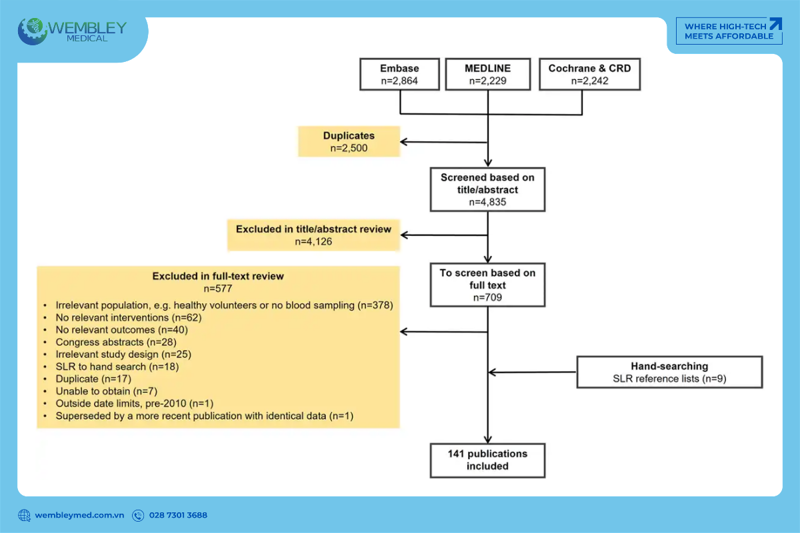
The research team searched major electronic medical databases for publications from 2010 onward. After screening in accordance with the PRISMA guidelines, 141 publications were included in the final analysis. These span six continents and include cross-sectional surveys, clinical trials, and both prospective and retrospective observational studies.
The rate of blood collection through VADs varies considerably between departments. Based on 16 studies reporting this rate, drawing blood through VADs is most common in the Emergency Department, trauma centers, the Intensive Care Unit (ICU), and hematology-oncology units. In these departments, more samples are often collected through VADs than by direct venipuncture, with ratios as high as 4:1 in some settings.
By contrast, for routine testing, large hospitals are more cautious. A 2018 survey of more than 80 U.S. hospitals found that 90% advised healthcare workers to prefer direct venipuncture over drawing blood from central lines, in order to reduce the risk of bloodstream infection and sample contamination.
Direct venipuncture sometimes requires skill and multiple attempts in patients who are difficult to draw. Even so, this method still achieves a high and consistent sample collection success rate in most patients.
Drawing blood from an existing PIVC faces more limitations:
In studies in children, the success rate of sample collection through PIVCs ranged from 76% to 91.3%.
The longer a catheter stays in place, the harder it is to draw blood from. The success rate was 85% for PIVCs in place for less than 24 hours, but only 63% for those in place for more than 24 hours, meaning more than one-third of attempts failed to obtain a sample.
Therefore, indwelling catheters are unlikely to serve as a sustainable solution for routine blood sampling.
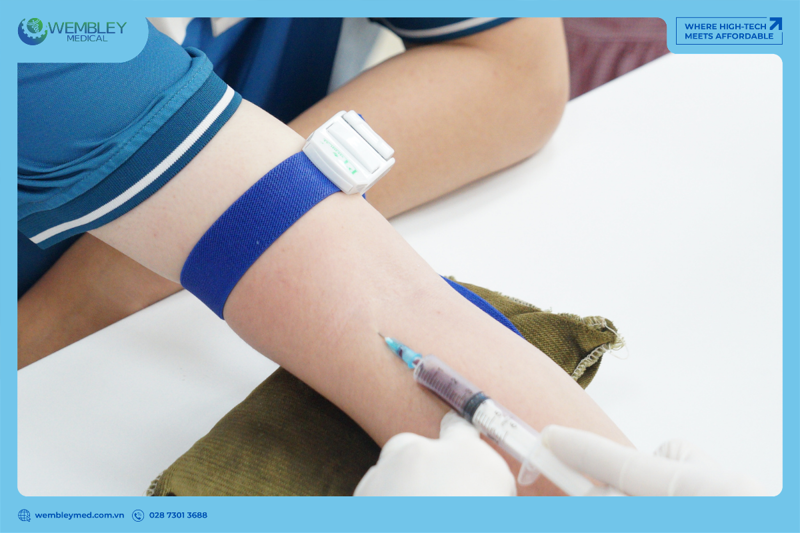
The most notable finding of this study is that the rate of hemolysis, the rupture of red blood cells, in samples drawn through catheters is significantly higher than in samples drawn by direct venipuncture. Most studies making direct comparisons reported higher hemolysis rates with PIVCs, with statistically significant differences. This is also consistent with an earlier meta-analysis by Lippi et al., which showed that drawing blood through intravenous catheters significantly increases the risk of spurious hemolysis compared with direct needle puncture.
Hemolysis matters because when red blood cells rupture, their intracellular contents are released into the specimen and can distort certain test results, for example, falsely elevated potassium (spurious hyperkalemia). If additive cross-contamination is also involved (such as EDTA, which causes falsely elevated potassium and falsely decreased calcium and magnesium, or contamination with clot activator), the risk of error is even higher.
The consequences go beyond the lab report. A suspect sample often has to be recollected, which means another needle puncture for the patient, longer waiting times, and added costs in supplies and labor for the hospital. This is how an error in the pre-analytical phase becomes an economic burden and affects the patient experience.
Based on the evidence above, the authors emphasize that reducing errors in the pre-analytical phase requires controlling the collection technique and choosing appropriate devices. Direct venipuncture remains the standard foundation. The quality of the blood collection equipment and the sample tube system has a major influence on the reliability of test results.
In practice, the following should also be noted:
Follow the standard blood collection procedure and the order of draw to limit additive cross-contamination.
Use the correct tube type for each group of tests.
When blood must be drawn from a vascular access device, follow the healthcare facility's protocol and the device manufacturer's instructions.
To standardize sample collection from the outset, many healthcare facilities choose vacuum blood collection tubes. Thanks to a preset vacuum pressure, the tube automatically draws the required blood volume with a stable suction force, helping to limit variation caused by manual handling and the risk of red blood cell rupture. The closed-system design reduces direct contact with blood, limiting the risk of sample contamination and protecting the biosafety of healthcare workers. In addition, a single needle puncture can fill multiple tubes in succession, shortening procedure time and reducing patient pain. Combined with proper collection technique and the standard order of draw, vacuum blood collection tubes help keep sample quality stable before it reaches the laboratory.
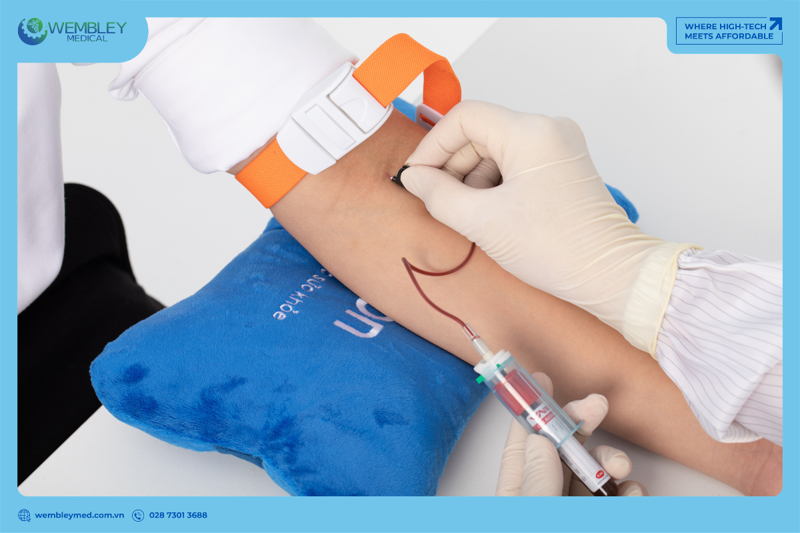
For test results to be reliable, the first requirement is a good blood sample. Proper collection technique is a necessary condition, and a quality-standard blood collection tube is an important partner in the pre-analytical phase. With this in mind, WEMBLEY MEDICAL offers blood collection tube solutions that meet quality standards, supporting healthcare facilities at every stage of standardizing the pre-analytical process.
VATRACY vacuum blood collection tubes are designed for facilities that want quick, efficient, and consistent blood collection in a closed system. Thanks to vacuum suction, blood flows directly from the vein into the tube, minimizing intermediate steps in the collection process. The system is designed to help shorten collection time, precisely control blood volume, reduce hemolysis, and lower the risk of sample spillage and needlestick injuries for healthcare workers.
The tube body is made from transparent polyethylene terephthalate (PET), offering excellent impact resistance and minimizing chemical evaporation. The polyethylene (PE) cap features a highly elastic rubber stopper, ensuring smooth needle penetration and secure sealing to prevent leakage during transport and laboratory handling.
VATRACY offers a full range of tubes for each testing group:
No Additive tube: for collecting blood samples without additives.
Serum tube (clot activator and polystyrene beads) and Serum & Gel tube (clot activator, polystyrene beads, and serum separator gel): for routine immunoassays, blood typing, Rh factor identification, antibody screening, and viral marker testing in clinical screenings.
EDTA tube (K2EDTA or K3EDTA): for routine immunohematology tests, blood grouping, and Rh typing.
Heparin tube (Lithium Heparin or Sodium Heparin): for collecting plasma samples for biochemical testing; not indicated for electrolyte analysis.
Citrate tube (Sodium Citrate 3.2% or 3.8%): for coagulation factor testing.
Glucose tube (glycolysis inhibitor Sodium Fluoride combined with K2EDTA, Potassium Oxalate, or Sodium Heparin): for glucose and lactate testing.
Erythrocyte Sedimentation Rate (ESR) tube.

URI blood collection tubes are a conventional non-vacuum line, convenient and flexible, meeting everyday sampling needs at healthcare facilities. The tube body is made of polypropylene (PP), known for its high resistance to cracking and excellent impact resistance, and it minimizes chemical evaporation. The polyethylene (PE) cap forms a secure seal with the tube body, keeping samples leakproof during transport and handling by laboratory technicians. Facilities can choose a standard cap or a cap with a rubber stopper, sterile or non-sterile tubes, in various sizes (12x75 mm, 13x100 mm, 16x100 mm). URI is available in No Additive, EDTA, Serum, Heparin, Glucose, and Citrate tubes.

Both product lines are manufactured on automated assembly lines in a Class 100,000 cleanroom, under a quality management system certified to ISO 13485:2016, ISO 9001:2015, and ISO 14001:2015, and in compliance with GMP standards. The products are certified to meet European CE Marking standards and have obtained Certificates of Free Sale (CFSs) for the United Kingdom and Spain.
Perry, C., Alsbrooks, K., Mares, A., & Hoerauf, K. (2023). Comparison of clinical, economic, and humanistic outcomes between blood collection approaches: A systematic literature review. Journal for Healthcare Quality, 45(6), 359–370. https://doi.org/10.1097/JHQ.0000000000000399
Lippi G, Cervellin G, Mattiuzzi C. Critical review and meta-analysis of spurious hemolysis in blood samples collected from intravenous catheters. Biochem Med (Zagreb). 2013;23(2):193-200. https://doi.org/10.11613/BM.2013.022